Obama Leader and Scholar advances reproductive rights in Europe
Nika Kovač's "My Voice, My Choice" pushed the EU to advance reproductive rights, expanding access to safe abortion for millions.
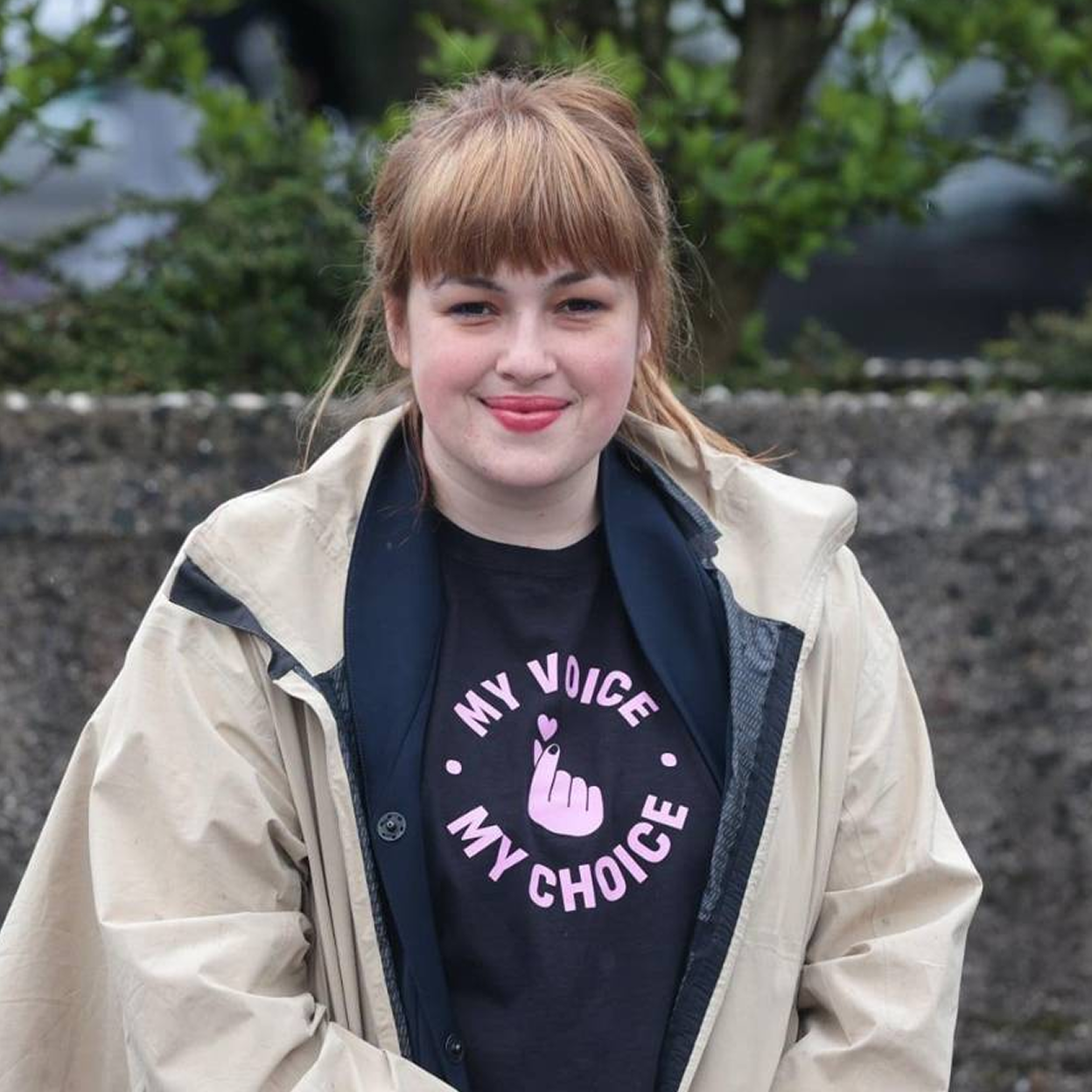
Nika Kovač was sitting in a university classroom in New York City as an Obama Scholar when the US Supreme Court decision leaked in the press in May 2022: American women would lose the right to an abortion nationally, and it would be up to each state to legislate access.
“It was the first time that I saw very practically how something that is taken for granted can be taken away in a moment,” said Kovač, a reproductive rights advocate from Slovenia.
The moment was a wake up call: “It was much more like, ‘OK, we need to organize; if this happened in the U.S., this can also happen in Europe.’”
Things moved quickly. In March 2024, Kovač, a 2020 Obama Europe Leader (Opens in a new tab) , and her Slovenian organization called Institute 8th of March, along with a coalition of feminist organizations from across Europe, launched a European Citizen Initiative (ECI) called My Voice, My Choice: for Safe and Accessible Abortion, to advance abortion rights as a fundamental human right and basic healthcare in the European Union. The ECI is a mechanism where, if citizens gather 1 million signatures in support of a proposal, the European Commission must formally consider the request, giving citizens a powerful tool to change EU policy.
On Thursday, February 26, 2026, the European Commission ruled (Opens in a new tab) that the 27 EU member states will be able to use existing EU funds for the first time to provide access to safe abortion care, a direct result of My Voice, My Choice, which asserted that women across the EU should have equal access to legal, safe abortions. This is the first time that an ECI successfully resulted in a change to EU policy. About a dozen other signature drives resulted in gathering 1 million for causes, but the Commission didn’t vote to take immediate and direct action.
The new funding mechanism will enable women from countries that severely limit abortion access, including Poland, Croatia, and Malta, covering about 20 million women, to go where it is legal.
Friends stepped up to get 1 million signatures
In launching My Voice, My Choice, Kovač and her team gathered hundreds of thousands of signatures. But reaching 1 million would not be possible without the help of the she met in her Obama Europe Leaders cohort. Kovač says their support pushed the movement forward.
Her peer, 2020 Obama Europe Leader Federica Vinci , who was the deputy mayor of a mid-sized Italian city, was a day-in-and-day-out collaborator working in tandem with Matteo Cadeddu , a 2025-2026 Obama Europe Leader.
“Federica, from Italy, jumped on it because she was like, ‘You're my friend. I believe in the cause. I will work with you.’”
Before Christmas 2024, the campaign stalled at 970,000, just short of the mandatory 1 million.
Luisa Neubauer , another peer from the 2020 Obama Europe Leaders Program from Germany, called to mobilize help, framing the movement within the context of shared challenges and worries about creeping authoritarianism across the globe.
"You're exhausted, my friend. I will get you the last 30,000 signatures," Kovač recalled Neubauer promising. Neubauer mobilized her activist network to secure the final needed endorsements.
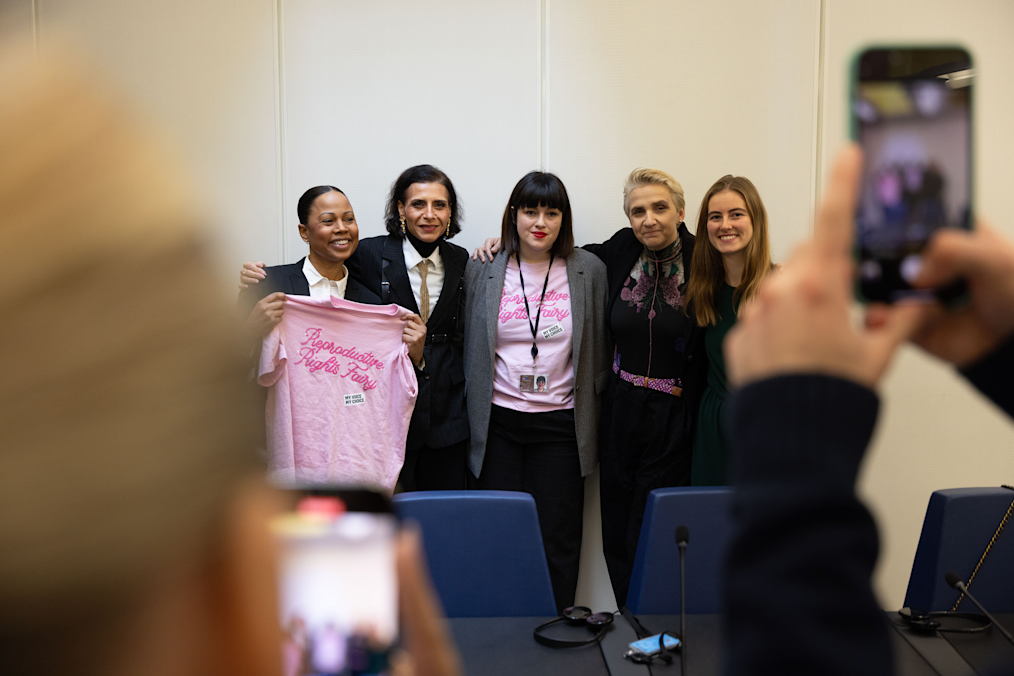
Finally, the collective action, which gathered more than 1.2 million signatures across 15 countries, reached the threshold for European Commission action (Opens in a new tab) . And when the campaign moved from the streets of Europe into the halls of power in Brussels, two friends gave a helping hand, 2022 Obama Europe Leader Delara Burkhardt , a Member of the European Parliament from the Social Democratic Party of Germany, and 2024-2025 Obama Europe Leader Arba Kokalari , a Member of European Parliament from the Swedish Moderate Party. And Sarah Durieux , another cohort member from the 2020 Obama Europe Leader program, coordinated the campaign in France.
The campaign won “because of friendship,” Kovač says. “Not because we would be so smart or because we would be so great, but because there was a group of friends who came together and were stubborn enough to push things forward.”
A Mission Inspired by Slovenia
For Kovač, the issue is meaningful on many levels. When her home country, Slovenia, was becoming independent from Yugoslavia in 1991, two years before she was born, a new constitution was being written and there were pressures to erase the right to choose from the text. But then she said, “very brave women from both sides of the political spectrum said no. They came together organized with civil society and protected this fundamental right for the generations to come.” Organizing around shared values and bringing people to achieve meaningful change is a lesson Kovač holds close to her heart.
Obama Foundation Supporting Scaling
Kovač credits The Obama Foundation Leaders and Scholars programs for helping her scale her work. When she started hearing the stories of her fellow Scholars, she said she realized that even though she had accomplished a lot in Slovenia, she had so much to learn about scaling her organizing.
“My whole country is two million people,” Kovač said, “It's basically a neighborhood of New York.”
That realization helped her understand the need for new tactics to collaborate with other European leaders to strengthen her years-long efforts.
The win is historic because the campaign first collected 1 million signatures, convinced the European Parliament to pass the proposal by 150 votes, and now successfully changed the European Commission’s agenda. Kovač said the victory sends a signal “that no one is too small, no one is too unimportant, if we come together we can achieve anything.”
“I believe that this work, this fight, is worth fighting,” Kovač said.
The My Voice, My Choice campaign, Kovač said, shows that a cohort of young women from around the world is redefining the way citizens view participation and engagement with institutions. This is a key element of the Obama Leaders Program, Scholars, and the Obama Leadership Network, connecting people from disparate backgrounds who are working on similar issues to ensure they can learn from each other and advance their social change work.
Kovač and her allies are doing this by building broad coalitions.

Sign up for the latest on the Obama Foundation
Explore more stories:

- Programs
- Stories

- Programs
- Stories

- Programs
- Stories